

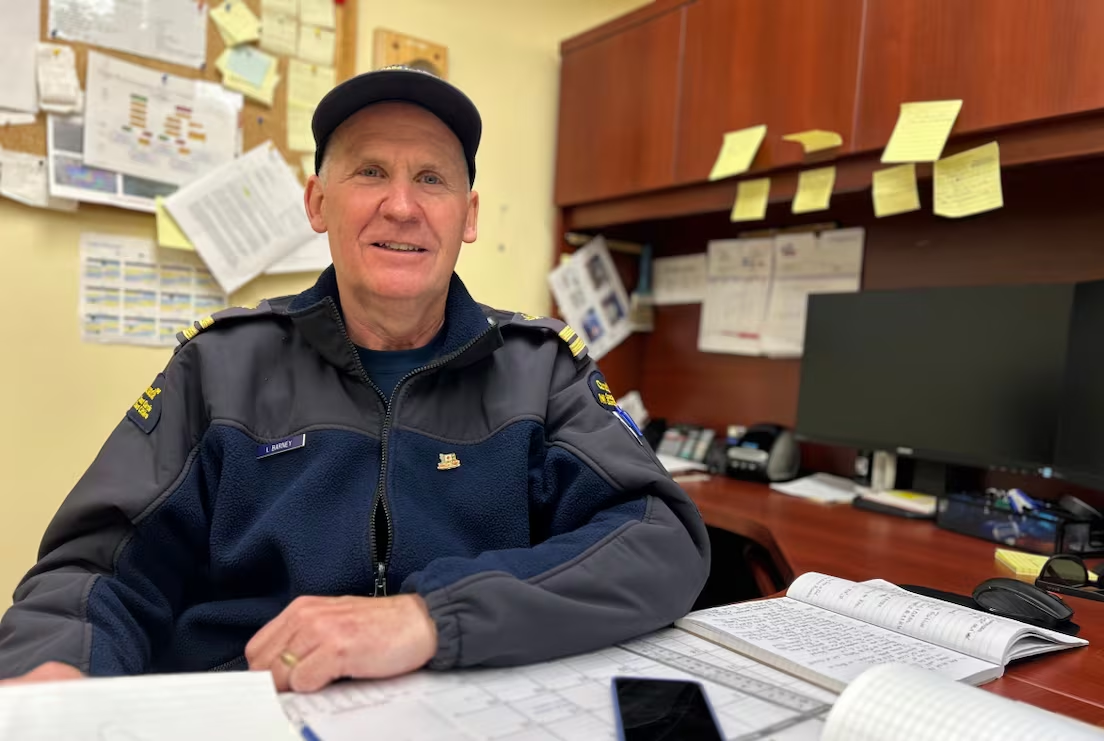
Port au Choix Fishing Boat Rescue: The Story
A Canadian Coast Guard crew responded to a distress call near Port au Choix, Newfoundland and Labrador, where a veteran captain described one of the most demanding missions of his career. What began as a routine fishing trip escalated within minutes as weather and sea state deteriorated. This Port au Choix fishing boat rescue underscores how vital early alerting, reliable communications, and cold-water readiness are for every small vessel. Crews that rehearse abandon-ship steps and keep EPIRBs registered and tested give rescuers the best chance to locate them quickly in low visibility. For fishers across Atlantic Canada, the Port au Choix fishing boat rescue is a wake-up call to prepare before lines are cast.
What This Means for Coastal Workers
- Call early, not late: Make contact the moment a situation might escalate; continuous monitoring on VHF Channel 16 means help mobilizes faster, and precise GPS coordinates speed response.
- Carry the right kit: Registered 406 MHz EPIRB, serviceable life raft, charged handheld and fixed radios, and immersion/anti-exposure suits sized for each person checked before each trip and logged.
- Drill the response: Practice abandon-ship, man-overboard, and standard MAYDAY format so actions are automatic under stress; post a waterproof cue card at the helm.
- Respect cold shock: Control breathing in the first minute, keep your airway clear, and let flotation work panic wastes precious energy and shortens workable time in the water.
Quick Safety Checklist (Start-of-Season)
- Verify EPIRB registration and test per schedule; confirm battery/service dates and update contact info with the registry lessons reinforced by the Port au Choix fishing boat rescue.
- Stage life rafts and radios where they can be launched or keyed immediately never under gear and check radio MMSI/DSC settings.
- Fit-check immersion suits for every crew member and brief donning steps with a timed drill; replace damaged seals or broken zippers.
- Review MCTS call procedure (position, nature of distress, persons aboard, assistance required); keep a waterproof cue card at the helm and rehearse monthly.
- Conduct and log a full abandon-ship drill; repeat monthly during the season, including life raft launch simulation and light/signal checks.
Cash Cowboy Connection: When the Sea Disrupts Your Income
In the aftermath of the Port au Choix fishing boat rescue, many crews are reassessing budgets for safety gear, repairs, and travel. Storm delays, gear damage, or medical travel can hit your budget as hard as the waves. Safety comes first, but unexpected costs shouldn’t become a second crisis. We help Canadian coastal workers bridge short-term gaps fast so you can focus on getting back to sea when it’s safe. For more ways we support coastal workers, see our Cash Cowboy insights.
- Fast online application for returning clients
- Clear terms, no hidden fees
- Supports urgent expenses like travel, repairs, or lost-income gaps
Apply securely at app.cashcowboy.net/login
FAQs
What should I say on the radio?
Use “MAYDAY,” vessel name/call sign, precise position (GPS if possible), nature of distress, number of persons aboard, and type of assistance required. Remain on Channel 16 unless directed to switch. If equipped, send a DSC distress alert first, then follow with voice.
Is an EPIRB required on small fishing vessels?
Requirements vary by voyage/class, but carrying a registered 406 MHz EPIRB is strongly recommended even when not mandated it shortens search time dramatically and provides rescuers with your last known position.
How long before hypothermia is critical?
Cold shock affects breathing within about a minute. Flotation and breath control keep you stable long enough for rescue; survival time depends on water temperature, clothing, and your ability to keep your airway clear. Get as much body out of the water as possible and minimize movement to conserve heat.
Sources & Further Reading
- CBC News: Port au Choix fishing boat rescue.
- Transport Canada: EPIRBs (406 MHz) guidance, Small Fishing Vessel Safety Guide, Cold-water survival.
- Canadian Coast Guard/MCTS: Distress & safety communications (RAMN).
This article is provided for general awareness; always follow official regulations and manufacturer instructions.
If this situation leaves a gap in your budget, Cash Cowboy offers fast online payday loans in Canada with a simple application and quick decisions.