

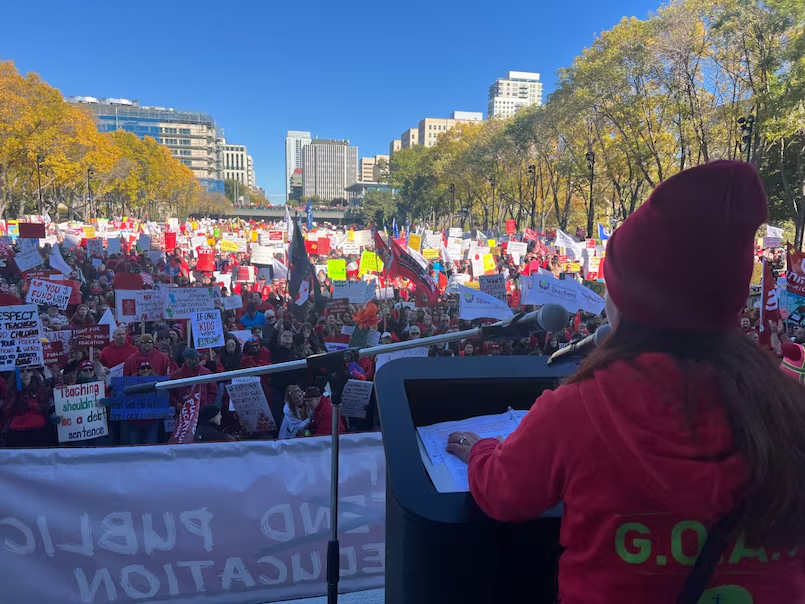
Teachers across Alberta walked off the job on 6 October 2025, marking the start of the Alberta teachers strike 2025, the largest labour disruption in the province’s history.
For months, the Alberta Teachers’ Association (ATA) had been calling for smaller class sizes, more support staff, and fair wages. However, negotiations with Premier Danielle Smith’s government stalled.
The Alberta teachers strike 2025 led to the closure of about 2,500 public, separate, and francophone schools, impacting more than 700,000 students—roughly one-quarter of Alberta’s population.
Parents scrambled for childcare, small businesses feared staffing shortages, and politicians exchanged accusations.
This article explores the Alberta teachers strike 2025, detailing how it unfolded, the demands made by the teachers’ union, and the government’s response. It also examines how families and businesses were affected, and why financial advice for teachers is crucial, especially considering the Alberta teachers strike 2025‘s financial pressures. Global news
Alberta Teachers Strike 2025: How the Strike Unfolded
A breakdown in bargaining
In late September 2025, the teachers’ employer bargaining association and the Alberta Teachers’ Association (ATA) reached a tentative four‑year agreement. The offer included a 12% salary increase over four years and promised to hire 3,000 new teachers and 1,500 educational assistants. Some teachers would have seen raises of up to 17%. (Juno News)
The deal aimed to lift top‑category salaries to about C$114,800 by 2027. However, more than 43,000 teachers voted online between 27 and 29 September, and 89.5% rejected the agreement. They argued that it failed to address issues such as oversized classes, growing student complexity, and long‑term underfunding.(ATA news release)
The ATA pointed out that teachers had received less than 6% in raises over the previous decade. Many educators also routinely paid out‑of‑pocket for classroom supplies (Juno News).
Strike begins (6 October 2025)
With the tentative agreement rejected, the ATA called a province‑wide strike beginning 6 October 2025. Union president Jason Schilling described the walkout as “the largest labour disruption in Alberta history” and a movement to “break the cycle of underfunding” (Juno News). Roughly 51,000 teachers took part, forcing all public, separate and francophone schools to close; more than 700,000 students were locked out of classrooms (Edmonton Journal). Schilling emphasised that the strike was not just about wages but about teacher‑student ratios, support for complex classrooms and respect for educators. Teachers at rallies noted that they often had to pay for classroom materials themselves (Juno News).
Alberta Teachers Strike 2025: Teachers’ Key Demands
The ATA’s strike demands fell into four broad categories:
Alberta Teachers Strike 2025: Demanding Reasonable Class Sizes and Support: Teachers sought hard caps on class sizes so they could give students individual attention and properly support those with special needs. Many classrooms had more than 30 students, and some had over 40, making it difficult to manage complex learning needs (Edmonton Journal). The union argued that government resources should be directed toward public schools rather than parent payments or private‑school funding.
More teachers and support staff: The rejected deal promised 3,000 new teachers and 1,500 educational assistants, but the ATA estimated that at least 5,000 new teachers were needed. Union leaders also called for more counsellors, psychologists and educational assistants to address mental health and student complexity.
Fair pay and pension protection: After receiving less than 6 % in salary increases over a decade (ATA news release), teachers wanted wages that kept pace with inflation and recognised their workload. Although the government’s 12 % offer would have made Alberta teachers among the best-paid in Western Canada (Juno News), nearly 90 % of educators deemed it insufficient.
Systemic respect for public education: Schilling said teachers were fighting to “break the cycle of underfunding” and ensure that every child’s needs were met (Juno News). The union wanted more input on curriculum reforms and opposed policies that they argued undermined public schools, such as the government’s home‑education payment program.
Alberta Teachers Strike 2025: Government’s Response and Counteroffers
Premier Danielle Smith and Education Minister Demetrios Nicolaides insisted that their offer was competitive. Smith argued that the salary proposal and hiring commitments would make Alberta teachers among the highest paid in Western Canada and that capping class sizes was impractical because of limited classroom space (Global News). She urged the union to return to the bargaining table, calling the strike a “lose‑lose” for teachers, students and parents (Edmonton Journal). Finance Minister Nate Horner noted that more than 50,000 new students had joined the system in recent years and said billions were earmarked for more than 100 new or modernised schools (Global News).
Opposition politicians criticised the government’s approach. New Democratic Party critic Amanda Chapman called the offer “insulting” and urged a return to good‑faith negotiations. The ATA reiterated that salary and staffing levels were secondary to ensuring appropriate learning conditions (ATA news release).
Impact on students and parents
All Kindergarten to Grade 12 classes across public, separate and francophone schools were cancelled for the strike’s duration (Edmonton Journal). Pre‑kindergarten continued, but transportation and extracurricular activities were suspended. The province launched an online curriculum toolkit and urged parents to teach children at home. To offset childcare costs, the government introduced a Parent Payment Program that provided parents or guardians of children aged 12 and under with $30 per day (C$150 per week) (Global News). Families could also temporarily home‑school their children and receive up to $450 per student during the strike (Juno News). Critics argued that these payments diverted funds away from classrooms and reinforced inequality.
Alberta Teachers Strike 2025: Impact on Small Businesses and the Economy
The strike’s ripple effects extended beyond schools. The Canadian Federation of Independent Business (CFIB) warned that the work stoppage would cut into staffing and revenues for small businesses because employees stayed home to look after children (Edmonton Journal). CFIB policy analyst Kayode Southwood noted that during Saskatchewan’s 2024 teachers’ strike, one‑third of small businesses experienced negative impacts and urged the Alberta government to resolve the dispute quickly. Small businesses feared that prolonged disruption would exacerbate labour shortages and hurt sales.
Public demonstrations and solidarity
Public support for teachers was visible across Alberta. On 5 October 2025, the day before the strike, thousands rallied outside the legislature in Edmonton, wearing red and carrying signs demanding better funding and smaller classes (Edmonton Journal). Parents emphasised the need for more individual support for learners; some said their children were in classes of nearly 30 students, making it hard for teachers to provide help. Teachers spoke about large class sizes, complex needs and the stress of managing without adequate support.
Financial stress: teachers caught between pay periods
Strikes can be financially devastating for educators because most teachers do not receive strike pay. While the ATA covered members’ health benefits during the walkout, many teachers still faced cash‑flow stress (Juno News). The budgeting article “Alberta Teacher Pay 2025: Quick Financial Tips” notes that teachers’ take‑home pay is reduced by pension contributions, Canada Pension Plan and Employment Insurance, benefits and union dues; actual net income varies by grid placement and tax bracket (CashCowboy). Budgets feel tight when multiple expenses — car repairs, home maintenance, childcare or extracurricular fees — occur around the same pay period, and key cost‑of‑living items such as housing, utilities, transportation and health care have risen with inflation.
To ride out cash crunches, CashCowboy suggests contacting service providers to negotiate payment plans and checking workplace or union supports before turning to credit. If short‑term borrowing is necessary, it recommends comparing options, borrowing only what’s needed and repaying quickly to minimise interest. These tips highlight the financial pressures teachers face and explain why compensation and stability are central issues in collective bargaining.
Public reaction and long‑term implications
Public opinion was divided. Supporters of the ATA argued that quality public education requires proper investment and that chronic underfunding harms students and teachers. Parents at rallies emphasised the need for smaller classes and individual support for learners, while many small‑business owners worried about lost productivity and revenue (Edmonton Journal). Critics, including Premier Smith, said the strike was disruptive and urged teachers to return to negotiations. As of this writing, exploratory talks continued, but any settlement will require ratification and time to implement (Global News).
Beyond immediate negotiations, the strike has reignited broader debates about the purpose of public education, the role of teacher unions and the balance between fiscal restraint and social investment. The government’s parent payment program may set a precedent for funding temporary supports through employee salaries. Teachers’ financial struggles, highlighted in the CashCowboy article, underscore the need for broader affordability measures and support for public servants.
When a disruption like this hits your paycheque or bills unexpectedly, a short-term online payday loan from Cash Cowboy can help cover urgent costs until things get back to normal.
Alberta Teachers Strike 2025: Conclusion and Long-Term Impact
The Alberta teachers strike 2025 was about more than just wages. It was a battle for an education system where teachers can focus on teaching, not struggling with overcrowded classrooms, inadequate support, and personal financial strain.
The Alberta Teachers’ Association (ATA)‘s demands—smaller classes, more staff, fair pay, and systemic respect for public education—resonated deeply with many parents, students, and small businesses.
Premier Danielle Smith’s government insisted it had made a generous offer but emphasized the need to balance budgets amid the Alberta teachers strike 2025.
The Alberta teachers strike 2025 led to widespread disruptions, leaving families scrambling for childcare and small businesses worried about staffing shortages.
Whether this Alberta teachers strike 2025 leads to lasting improvements or deepens divisions will depend on the outcome of ongoing negotiations.
In the meantime, families continue to juggle childcare, businesses face staffing shortages, and teachers are forced to dip into their savings.
The Alberta teachers strike 2025 serves as a reminder that a strong public education system is not a cost, but an investment in Alberta’s future.