

From Armistice to Remembrance
Remembrance Day was first observed in 1919 throughout the British Commonwealth as Armistice Day, later formalized in Canada as Remembrance Day. Its core elements the two minutes’ silence, the Last Post, and wreath-laying remain the backbone of ceremonies today, whether at the National War Memorial in Ottawa or at local cenotaphs across the country. Canada.ca: Remembrance Day.
Why the Poppy?
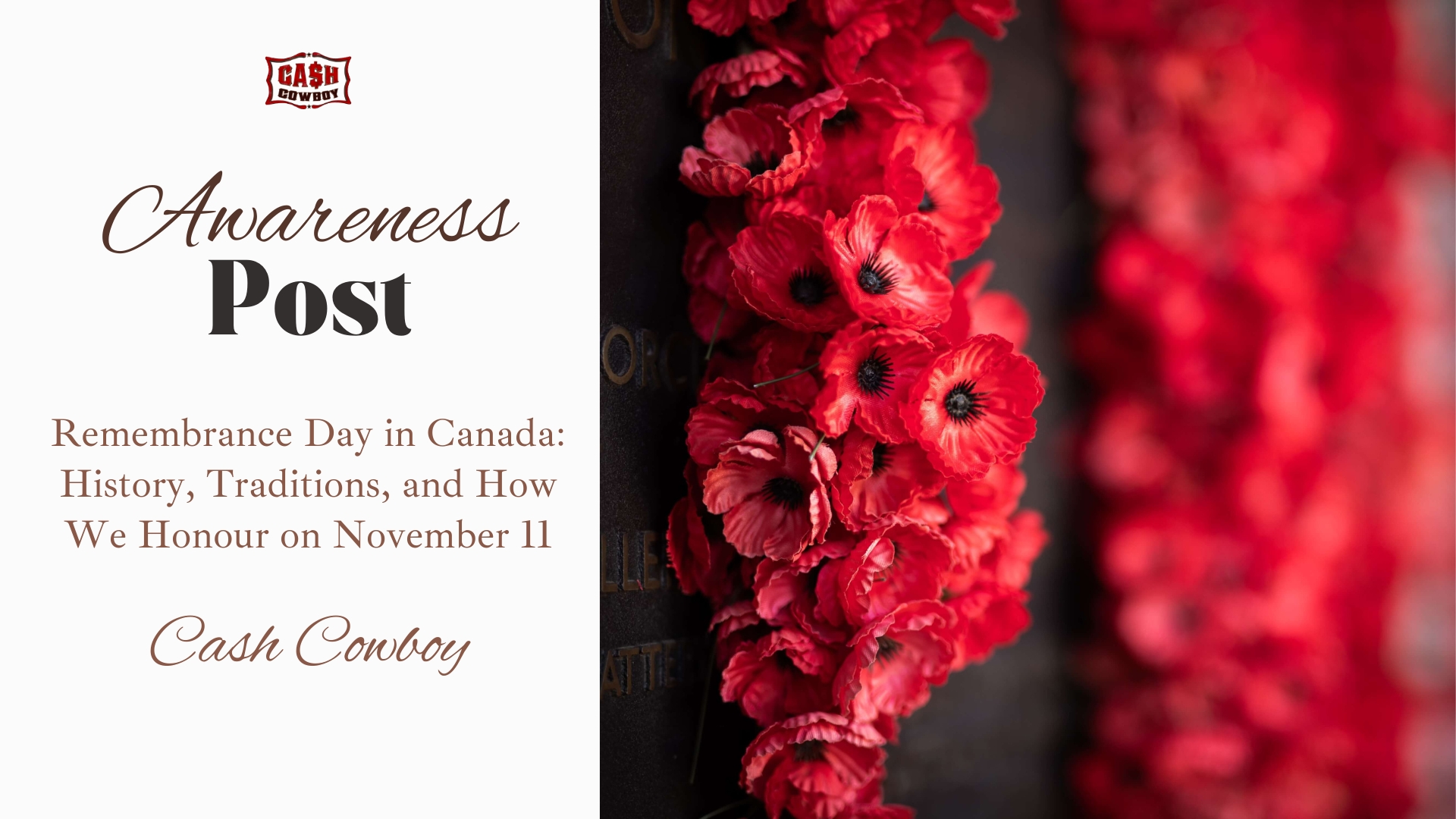
The red poppy became a symbol of remembrance because of Lieutenant-Colonel John McCrae’s poem In Flanders Fields (1915), written after the Second Battle of Ypres. The poem’s imagery of poppies growing among soldiers’ graves inspired international poppy campaigns and poppy appeals that still support veterans today. Read the poem via the Academy of American Poets: In Flanders Fields.
In Canada, the Royal Canadian Legion leads the annual Poppy Campaign. Poppies are distributed freely; donations to the Poppy Fund assist veterans and their families with services such as financial support, housing, and well-being programs. Learn more or donate: Legion Poppy Fund; The Poppy campaign.
What Happens at the National Ceremony?
Canada’s national ceremony takes place in Ottawa at the National War Memorial. The program typically begins around 10:30 a.m. and includes the Veterans’ March, O Canada, the Last Post, a two-minute silence at 11:00, the Lament, the Rouse, the Act of Remembrance, a 21-gun salute, and wreath-laying. The ceremony is organized by the Royal Canadian Legion and is televised nationally. Schedule details: Legion: National Remembrance Day Ceremony.
Statutory Holiday Status: It Varies by Province
Remembrance Day is a federal observance on November 11, but whether it is a paid statutory holiday depends on provincial/territorial laws. It is a statutory holiday in several jurisdictions, while others treat it as an observance day. For example, Ontario and Quebec generally do not designate November 11 as a provincial statutory holiday, whereas jurisdictions like Saskatchewan and British Columbia do. Manitoba treats it as an official day of observance with retail restrictions (most retail must remain closed from 9 a.m. to 1 p.m.). Helpful summaries: timeanddate.com roundup; Retail Council quick facts; Manitoba law reference: Remembrance Day Act.
Indigenous Veterans Day (November 8)
On November 8, communities across Canada mark Indigenous Veterans Day to recognize First Nations, Inuit, and Métis contributions in major conflicts and peacekeeping missions. Ceremonies are held at monuments such as the National Aboriginal Veterans Monument in Ottawa, and many cities host dedicated events. Learn more from Veterans Affairs Canada and municipal organizers: Indigenous Veterans; City of Toronto ceremony.
Marking the Day: Traditions and Etiquette
- The Two Minutes’ Silence (11:00 a.m.): Many ceremonies include the Last Post, the “Ode of Remembrance,” and a two-minute silence. Wreaths are then laid at local memorials. Overview.
- Wearing the poppy: Traditionally worn on the left side near the heart from the last Friday in October until November 11. Donations support veterans via the Legion’s Poppy Fund. Legion: The Poppy.
- Attending or streaming a ceremony: National ceremonies in Ottawa are televised and streamed; many municipalities post local details. Program schedule; CPAC coverage.
Understanding Symbols and Sites
The National War Memorial in Ottawa has served as the focal point for national Remembrance Day ceremonies since 1940. Alongside it lies the Tomb of the Unknown Soldier, where wreaths are placed by dignitaries, veterans, and community representatives. Crowds often number in the tens of thousands, and coverage is coordinated to reach viewers across Canada. Background: National War Memorial.
Canada’s remembrance culture has also grown to include recognition of diverse service stories from women and racialized service members to Indigenous veterans ensuring a fuller historical record is reflected at ceremonies and in classrooms. Veterans Affairs’ resource hub collects stories and learning materials: Veterans’ Week & Remembrance.
How to Take Part Respectfully
- Pause at 11:00 a.m. Whether at a formal service or at work/school, the two minutes’ silence is the heart of the day. Ceremony elements.
- Support veterans: Donate to the Poppy Fund or volunteer with organizations that serve veterans and their families. Donate.
- Learn and share: Read the history behind Remembrance Day and share veterans’ stories with younger Canadians. History & traditions.
- Attend local events: Check your municipality or Legion branch for ceremony times, travel restrictions, or road closures on November 11. Legion ceremony info.
If You’re New to Canada
Remembrance Day is an opportunity to learn how the world wars, the Korean War, Afghanistan, UN/NATO peacekeeping, and domestic operations shaped Canada. Many newcomers find the ceremony a meaningful entry point into civic life standing alongside neighbours, hearing In Flanders Fields, and observing the silence together. Quick reference: In Flanders Fields; Veterans’ Week resources.
Internal link: If an unexpected expense arises around Veterans’ Week, we’re here to help you plan and stay on track see our resources at Cash Cowboy.
Sources & Further Reading
- Veterans Affairs Canada: Quick facts on Remembrance Day.
- Canada.ca: Remembrance Day – history & traditions.
- Royal Canadian Legion: The Poppy & Poppy Fund.
- National ceremony program: Ottawa schedule.
- Provincial status & retail guidance: timeanddate.com; Retail Council; Manitoba Remembrance Day Act.
- Indigenous Veterans Day: Veterans Affairs page; City of Toronto.