

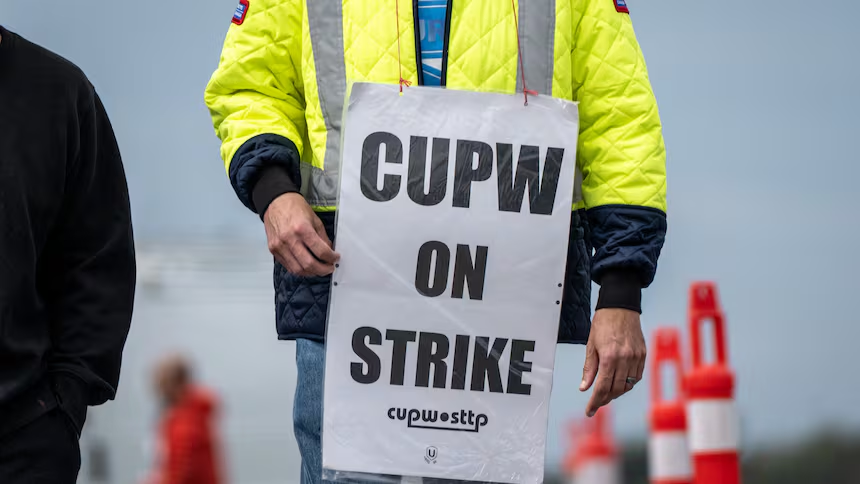
Canada Post Section 107 of the Canada Labour Code is one of Ottawa’s most powerful yet least-known labour tools. Enacted in 1984, this provision allows the federal labour minister to end strikes or lockouts in federally regulated industries when they threaten “industrial peace.” (Reuters)
For decades, Section 107 gathered dust — used sparingly and only in extreme cases. But since mid-2024, the Liberal government has turned to it at least five times across rail, ports, and postal sectors. (Reuters)
At its core, Canada Post Section 107 lets Ottawa order striking postal employees back to work while freezing the current terms of employment. It doesn’t impose a new contract but forces both sides — Canada Post and the Canadian Union of Postal Workers (CUPW) — back to the bargaining table. (CKOM)
How Section 107 Was Used in the Canada Post Strike
The provision gained national attention in late 2024 during the Canada Post holiday strike. Then-Labour Minister Steven MacKinnon invoked Section 107, ending a nationwide work stoppage that had disrupted deliveries during the peak shopping season. (CKOM)
The CUPW immediately challenged the decision, calling it unconstitutional and a violation of the right to strike. In October 2025, the Canada Industrial Relations Board (CIRB) upheld Ottawa’s move, confirming that Section 107 was legally valid. (CKOM)
The ruling, however, wasn’t unanimous — one CIRB member dissented, arguing the order infringed workers’ rights. Still, the majority concluded Ottawa could legally halt the Canada Post strike in the name of public interest. (CKOM)
Why Ottawa Defends Section 107
Government officials insist that invoking Section 107 is a last resort. Jobs Minister Patty Hajdu’s office said postal disruptions can “make or break” small businesses and hurt families who rely on timely deliveries. (Reuters)
The government’s goal, they argue, isn’t to side with employers but to restore essential services while pushing both parties back to negotiations. A spokesperson added that “the strongest deals happen at the table.” (Reuters)
Each labour dispute, officials maintain, is unique. Section 107 is triggered only when mediation fails and when the broader economy faces harm. (Search.Open.Canada.ca)
Union and Worker Reactions
Unions and labour advocates see things differently. CUPW president Jan Simpson said postal workers “did not take the decision to move to a nation-wide strike lightly” and accused Ottawa of undermining free bargaining. (Reuters)
She warned that repeated use of Section 107 gives employers an incentive to delay talks, knowing the government could step in. Economists and union groups, including CUPE and the Canadian Labour Congress, argue that the law tilts the playing field against workers. (Newswire.ca)
CUPE President Mark Hancock even called the provision “corrosive,” saying it encourages management to rely on political intervention instead of meaningful negotiation. (NSNews)
Unions have also filed constitutional challenges, arguing Section 107 violates Charter rights and should be repealed or amended. (Reuters)
Opposition Parties Join the Debate
Political reaction has been fierce. Interim NDP Leader Don Davies accused the Liberals of a “blatant misuse” of Canada Post Section 107, urging a parliamentary debate on back-to-work laws. (NSNews)
Conservative Leader Pierre Poilievre criticized the government for “sidestepping democracy,” arguing such powers undermine transparency and worker trust. During recent Question Period sessions, MPs pressed the government on why it acted without consulting Parliament. (Search.Open.Canada.ca)
Business associations, however, supported the move, citing severe financial losses during the strike. Small business owners said the postal shutdown delayed deliveries, reduced sales, and damaged customer trust. (Reuters)
Current Status and What Lies Ahead
As of late 2025, Canada Post’s labour conflict is still unresolved. Following the back-to-work order, CUPW shifted from a full strike to rotating regional shutdowns — keeping some mail flowing while maintaining pressure on management. (CKOM)
Meanwhile, Canada Post introduced cost-cutting reforms, including reducing door-to-door service. Unions fear these changes could lead to thousands of job losses. (CKOM)
Federal mediation continues, but no new collective agreement has been reached. CUPW has also taken its case to federal court, seeking to overturn Section 107 orders. (Reuters)
The outcome could redefine how Canada balances essential services with worker rights. For now, the postal system runs — but beneath the surface, tensions remain.
Final Thoughts
Canada Post Section 107 represents a clash between efficiency and democracy — between keeping Canada’s mail moving and preserving workers’ rights to strike.
Supporters see it as a safeguard against national disruption. Critics see it as a shortcut that erodes fair negotiation.
Either way, Section 107 is reshaping the conversation about labour power in federally regulated industries — and how far Ottawa should go to keep the mail moving.
External References:
Reuters | CKOM | NSNews | Newswire.ca | Search.Open.Canada.ca | CBC News
Internal Links (live)
- CashCowboy — https://cashcowboy.net/
- Explore more resources from CashCowboy — Cash Cowboy services
If this situation leaves a gap in your budget, Cash Cowboy offers fast online payday loans in Canada with a simple application and quick decisions.