

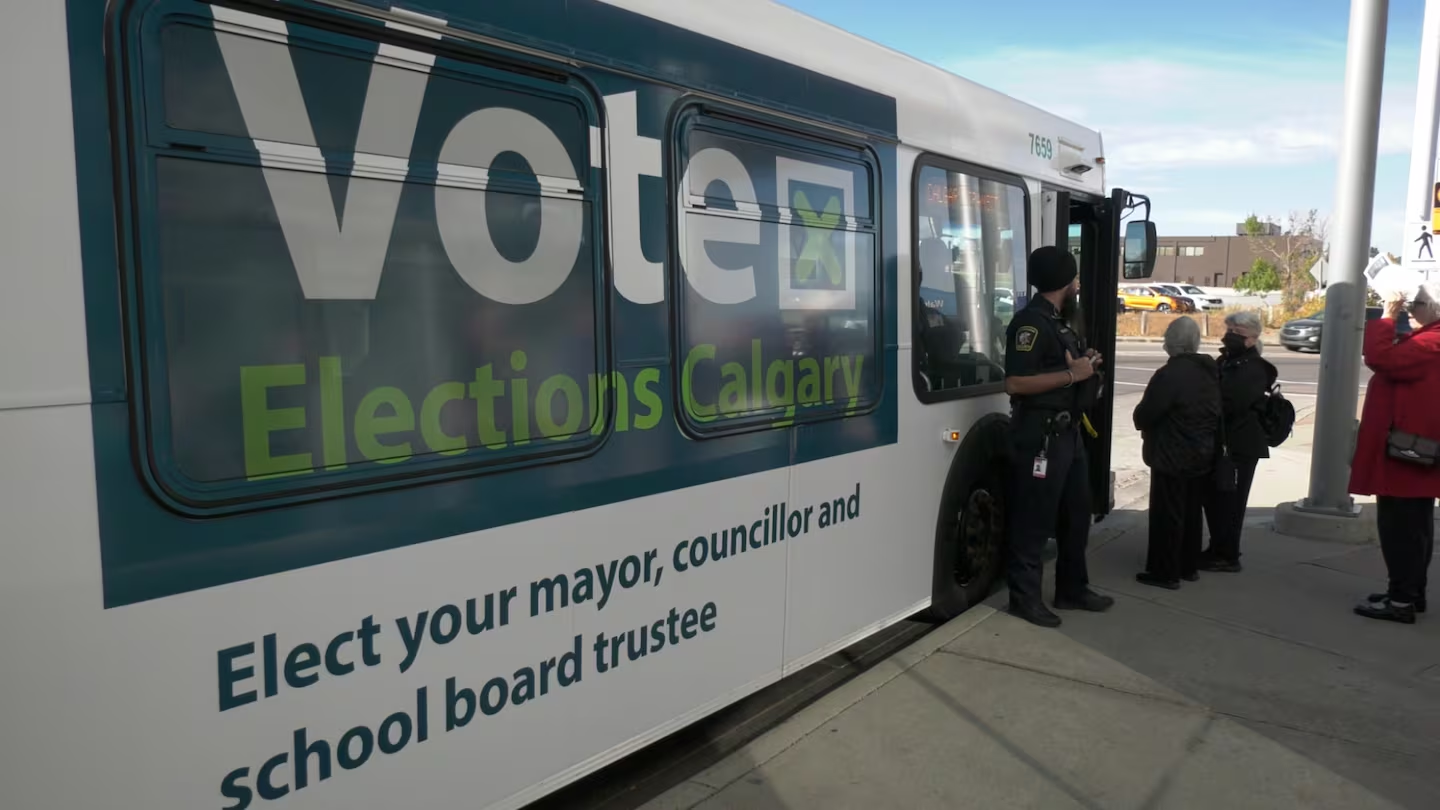
Calgary Election 2025: The Calgary municipal election is fast approaching on October 20, 2025. Voters will decide on a new mayor, 14 city councillors, and school board trustees for both public and Catholic systems.
This election is notable as the first in Calgary to allow municipal political parties, a change that was introduced in late 2024. Candidates can now run under party banners rather than as independents.
A total of nine mayoral candidates are running, along with 73 candidates for city council and numerous school board candidates. The race is still up in the air, and the final results could hinge on voter turnout and which issues resonate most with the electorate.
(CTV News Calgary)
Calgary Election 2025: Key Mayoral Candidates
There are nine candidates vying for the mayoralty, but five high-profile candidates have emerged as frontrunners:
Jyoti Gondek (Incumbent Mayor): Gondek, Calgary’s first female mayor, is seeking a second term. She emphasizes resisting provincial interference in city affairs and plans to demand accountability from the provincial government if re-elected.
Jeromy Farkas (Former Councillor): A former city councillor, Farkas finished second in the 2021 mayoral race. His platform focuses on pragmatic governance, bridging divides between conservative and liberal governments.
Sonya Sharp (Ward 1 Councillor, Communities First): Sharp, running under the Communities First party, advocates for a fresh start in Calgary’s relationship with the province.
Jeff Davison (Former Councillor, Endorsed by A Better Calgary): Davison is focused on pro-business policies, including a property tax freeze.
Brian Thiessen (Lawyer, The Calgary Party): Thiessen, running under The Calgary Party, is critical of the provincial government’s influence on city matters.
( Global News)
Calgary Election 2025: Major Issues and Campaign Themes
Several key issues have dominated the Calgary Election 2025 campaign, shaping voter sentiment and candidates’ platforms:
Housing Affordability & Cost of Living: As housing prices soar, affordability has become a central concern. Nearly 78% of Calgarians have cited housing affordability as their primary concern. Candidates have pledged to address the housing crunch and control living costs.
City–Provincial Relations: Tension between Calgary’s municipal government and the Alberta provincial government has sparked debate, especially regarding issues like Green Line LRT funding. Some candidates, such as Gondek and Thiessen, have criticized the province’s involvement in city projects, while others like Sharp and Davison advocate for more collaboration.
Public Transit & Infrastructure: The future of the Green Line C-Train expansion has been a key point of discussion. Delays and budget constraints are shaping candidates’ platforms on transit expansion and infrastructure development.
Public Safety & City Services: The ban on photo radar and crime issues have been raised, particularly by the Calgary Police Union.
Economic Growth & Jobs: The need to support job creation and attract investment to Calgary remains a prominent theme, as the city looks to recover from the pandemic and diversify its economy.
( CityNews Calgary)
Calgary Election 2025: Voter Sentiment and Challenges
Despite the high stakes, voter apathy has been a concern. Advance polling numbers have been lower compared to previous elections, with only 6.1% of eligible voters casting early ballots. The rise of new party-affiliated candidates has added a layer of confusion for some voters, while others feel overwhelmed by the crowded field of candidates.
Polls show that 34% of voters are still undecided, with many expressing uncertainty over their choices. This makes the race particularly fluid, as last-minute issues or campaigns’ final pushes may sway voters who remain unsure.
Calgary Election 2025: Polls and Election Outlook
Polling throughout the fall has shown that the top four or five candidates are within close range of each other, with Jeromy Farkas leading at 27% support. Jyoti Gondek and Sonya Sharp follow closely behind with 23% each, and Jeff Davison is at 16%.
With no clear frontrunner, the race remains wide open, and polling numbers could shift in the final days leading up to the election.
Factors such as incumbency, name recognition, and ideological splits could play a significant role in determining the winner. The rise of party-affiliated candidates (Communities First, Calgary Party) introduces a new dynamic to the race, shifting the political landscape.
Key Dates and Context
Sept. 25: The CUPW launched a national strike after the Alberta government’s overhaul of Canada Post.
Oct. 10–11: The CUPW shifted to rotating strikes, and operations restarted with delays.
Oct. 20: Election Day in Calgary.
The Calgary Election 2025 is shaping up to be one of the tightest in recent history, with multiple candidates vying for the mayor’s office. While several key issues like housing affordability, transit expansion, and economic growth dominate the discussions, voter uncertainty remains a major factor. With no clear frontrunner, the outcome of the election could depend on small swings or mobilization of support in the final days.
Every vote will count, and the results will shape Calgary’s future in areas like housing, taxes, and public services for the next four years. Voters are encouraged to head to the polls on October 20 to make their choice and influence Calgary’s future direction.
CTV News Calgary
(Cash Cowboy)
If moments like this stretch your spending more than expected, Cash Cowboy offers personal loans online in Canada, with bad credit considered.